
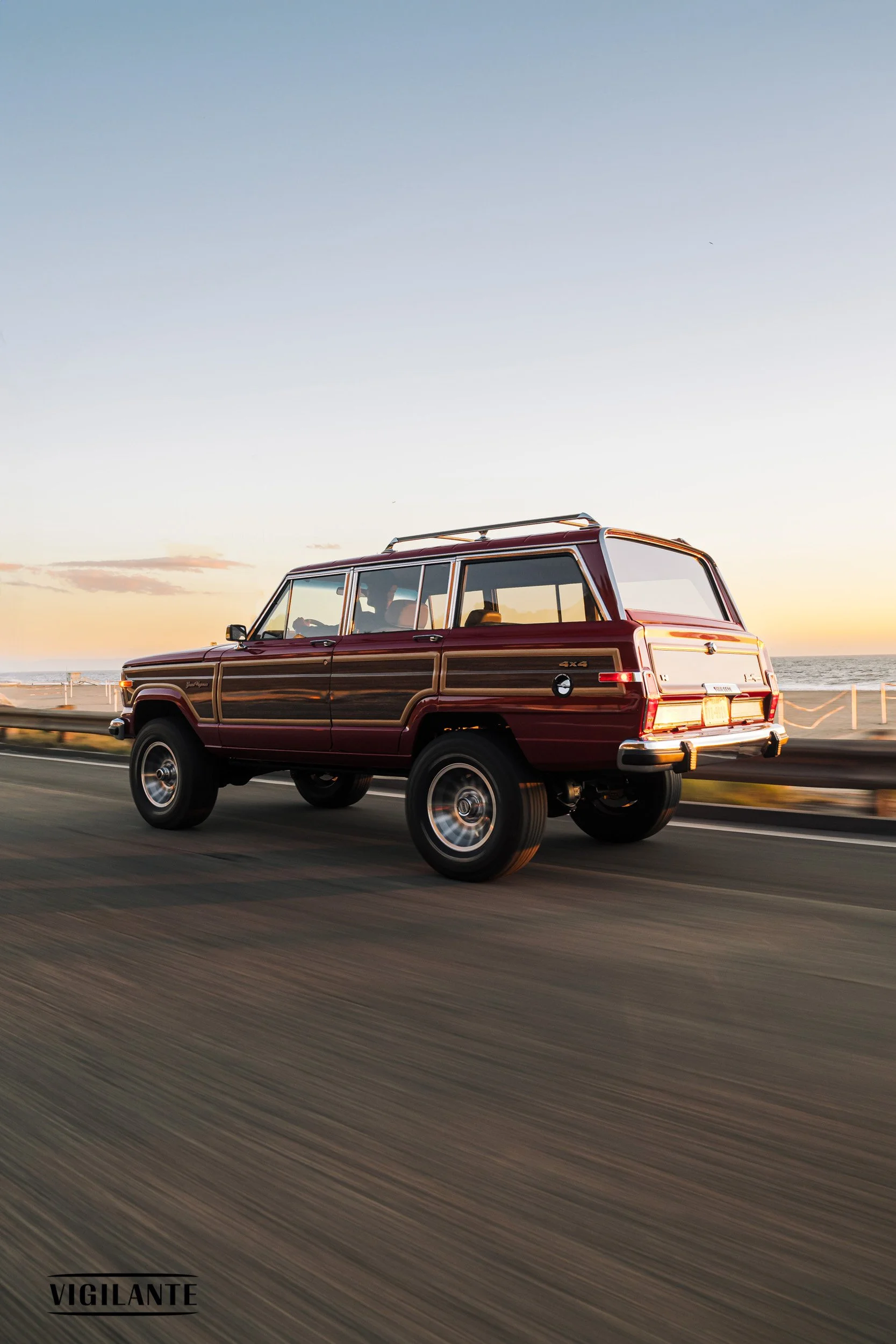
The Jeep Grand Wagoneer (1984–1991) Owner's Bible
Your Grand Wagoneer, Perfected.
The Jeep Grand Wagoneer isn't just a vehicle; it's a legacy. A symbol of timeless design, iconic woodgrain, and an elegance that modern manufacturers have never quite managed to replicate. But a thirty-year-old legacy comes with real-world challenges: cracking plastics, seizing mechanisms, and failures that turn passion into frustration. The market's solutions often make things worse—universal parts that never fit quite right, and low-quality replacements that just delay the next breakdown.
VIGILANTE 4x4 was created to refuse this compromise.
Born from two decades of restoring the world's most demanding Full-Size Jeeps, VIGILANTE is the obsessive engineering arm of Jeep Heritage. Its mission is not to replace, but to reinvent. Every part in this collection was first developed for our full-scale restorations—vehicles that start from a bare frame and command prices of over $300,000—where perfection isn't an option, but the absolute standard.
This page is your arsenal. The complete, organized list of all VIGILANTE upgrades available for your 1984–1991 Grand Wagoneer, categorized by vehicle section. For each part, you'll find the original problem it solves, the engineering solution we developed, a direct link to the shop, and the corresponding New Parts Friday video to see it in action.
Collectibility & Market Value
By 2021, the 1984–1991 Grand Wagoneers were among the most sought-after vehicles during the COVID-19 pandemic, according to Hagerty, ranking in the top 9 of the best vintage cars on the market. Appraisal values had been rising an average of 2–6% every two months for most of the previous decade. Pristine examples now sell for more than their original sticker price — over 30 years after leaving the factory.

Known Issues: A Realistic Guide

The VIGILANTE Promise

Technical Reference

Year-by-Year Changes: 1984–1991

I. Powertrain & Chassis

II. Exterior

III. Tailgate & Cargo

IV. Interior

V. Electrical & Climate Control

VI. Grand Wagoneer 1984–1991 Collection Summary

VII. Jeep Heritage Restored Original Parts
Vehicle Identity Card
-
1984–1991 (Chrysler, from 1987)
-
Toledo, Ohio — Stickney Plant
-
4-door full-size SUV
-
Full Size Jeep (SJ) — unchanged since 1963
-
110 in (2,794 mm)
-
186.4 in (4,735 mm)
-
74.8 in (1,900 mm)
-
66.4 in (1,687 mm)
-
~4,514 lb (2,048 kg)
-
~4,514 lb (2,048 kg)
-
~4,514 lb (2,048 kg)
-
29 model years — 3rd longest in U.S. automotive history
Known Issues:
A Realistic Guide
Before you can build your perfect Grand Wagoneer, you need an honest assessment of its weak points. This section lists the most common problems documented by owners and restoration experts over the past 30 years. Use this as your diagnostic checklist.
Corrosion & Rust

Floor pans — the most critical point. Water channels from the scuttle drain (clogged with leaves under the windshield) directly onto the carpet, where it sits and accelerates corrosion from the inside out. A rotten floor pan is the single most common reason a restoration becomes a major project.
Frame rails — not galvanized from the factory. Salt-belt vehicles are particularly vulnerable; rust in the frame rails can compromise structural integrity.
Front fenders near the parking lamp — a notorious rust trap. These panels are no longer available new from any supplier.
Fuel tank area — where the tank meets the body is a common rust accumulation point, often invisible until the tank is dropped.
Underbody & chassis — general undercoating failure after 30+ years, especially on vehicles from the Northeast or Midwest.
Door bottoms & lower body panels — paint bubbling and rust-through, often covered by previous owners with body filler.
Some of these issues have been solved — see Section II: Exterior and Section I: Powertrain & Chassis.
Engine & Fuel System
Carburetor — cited by experts as responsible for approximately 40% of all running issues. Difficult to tune at altitude or in extreme heat. The factory never transitioned to fuel injection despite Chrysler's modern systems being available after 1987.
Rear main seal oil leak — extremely common on the AMC 360 V8. Repair cost ranges from $500 to $1,000 due to the labor involved.
Motorcraft ignition system — a known weak point. Ignition module failures cause sudden no-start situations with no warning.
Low oil pressure — frequently reported, often caused by worn oil pump or incorrect viscosity oil. Can trigger the oil pressure warning light at idle.
Complex vacuum system — a web of vacuum lines under the hood controls emissions, HVAC, and 4WD engagement. Any leak causes cascading symptoms that are difficult to diagnose.
Fuel gauge inaccuracy — the sending unit in the tank is prone to failure, causing erratic or dead fuel gauge readings.
Coolant system leaks — radiator hoses, water pump, and thermostat housing are common failure points after 30+ years.
Some of these issues have been solved — see Section I: Powertrain & Chassis.
Electrical System
Instrument cluster gauges — oil pressure, temperature, and fuel gauges frequently stop working due to failed printed circuit board (PCB) or faulty voltage regulator (CVR) on the cluster. A widespread and well-documented issue across all years.
Wiring harness degradation — original wiring insulation becomes brittle and cracks with age, causing intermittent shorts, blown fuses, and difficult-to-trace gremlins.
Ignition switch — the column-mounted ignition switch is prone to failure, causing no-start or sudden electrical shutdown while driving.
Charging system — alternator and voltage regulator failures are common, often causing battery drain or erratic gauge behavior.
Dashboard lighting — dimmer rheostat failures cause partial or total loss of instrument lighting.
Key buzzer & courtesy lights — small but frequently reported failures due to aging relay contacts.
Some of these issues have been solved — see Section V: Electrical & Climate Control.
Power Windows & Doors
Power window flex track mechanism — the single most frequently cited interior failure. The plastic "flex track" that guides the window glass deforms and breaks, leaving the window stuck. NOS replacement parts are nearly impossible to find.
Window regulators — the motor and regulator assembly corrodes and seizes, particularly on the rear doors.
Door latch mechanisms — both the fork-style (1979–1991) and round-style latches wear out and can leave doors that won't close properly or won't open from inside.
Power mirror switch — the internal contacts of the mirror control switch fail, making mirror adjustment impossible. The part is sold out from all OEM suppliers.
Power seat motor — the 6-way power seat motor assembly seizes or burns out, leaving the seat fixed in one position.
Some of these issues have been solved — see Section V: Electrical & Climate Control.
Climate Control & HVAC
Air conditioning system — the original A/C system uses R-12 refrigerant (no longer available), requires conversion to R-134a, and the compressor, evaporator, and condenser are all aged beyond reliable service life. Finding a properly functioning factory A/C system is extremely rare.
Heater core — prone to leaking after 30+ years, causing coolant to seep into the cabin and fog the windshield from the inside.
Vacuum-operated HVAC controls — the blend door and mode selection are vacuum-actuated. Any vacuum leak in the system causes the HVAC to default to defrost mode regardless of the selected setting.
Blower motor — the cabin blower motor resistor fails, causing the fan to work only on the highest speed setting.
Some of these issues have been solved — see Section V: Electrical & Climate Control.
Drivetrain & Suspension
Selec-Trac transfer case — the vacuum-operated shift mechanism is prone to failure if a vacuum leak occurs. The result is an inability to engage or disengage 4WD. The NP228/NP229 units are reliable mechanically but require vacuum system integrity.
Shift-on-the-fly 4WD engagement — may require several feet of vehicle movement to fully engage, and low-range can grind on engagement. Normal for the design, but often mistaken for a fault.
Dana 44 front axle — U-joints and ball joints wear over time and are a standard maintenance item. Worn ball joints cause wandering steering and clunking.
AMC Model 20 rear axle — the 2-piece axle shaft design is a known weak point under heavy load or off-road use. Prone to axle shaft breakage compared to Dana 44 alternatives.
Leaf spring fatigue — the rear leaf springs sag after decades of use, causing a nose-up stance and reduced load capacity.
Steering box — the recirculating ball steering box develops play over time, causing vague, wandering steering. A common complaint on high-mileage examples.
Some of these issues have been solved — see Section I: Powertrain & Chassis.
Exterior & Body
Woodgrain vinyl — the iconic exterior woodgrain delaminates, fades, and peels. Reproduction vinyl is available but requires full removal and professional application for a clean result.
Chrome trim & bumpers — the factory chrome pits, flakes, and rusts. Replacement bumpers are increasingly difficult to source in correct specification.
Roof rack — the chrome brackets corrode and the rack itself develops structural rust if not maintained.
Tailgate lock assembly — the lock mechanism and bezel corrode and seize, making the tailgate difficult or impossible to open from the outside.
Rear tailgate glass — the power rear window mechanism is a known trouble point. The motor fails, and the glass can become stuck open or closed.
Front fender parking lamp area — rust-through is so common here that it is considered a standard inspection point. Replacement fenders are no longer available new.
Windshield & rear window seals — the rubber seals harden and crack, allowing water infiltration that feeds the floor pan rust cycle.
Some of these issues have been solved — see Section II: Exterior and Section III: Tailgate & Cargo.
The VIGILANTE Promise
“If a part is good enough for a $300,000 VIGILANTE build, it’s good enough for your project.”
The VIGILANTE process is built on three non-negotiable principles. First, 3D scanning and precision engineering: every original part is digitized to capture every curve and detail, then its structural failure points are identified and corrected. Second, superior materials: where the factory used hollow plastic, VIGILANTE uses CNC-machined billet aluminum; where thin sheet metal bent, reinforced steel takes its place. Third, real-world testing: every component is validated over hundreds of miles in the Texas Hill Country before being approved for sale.
By choosing a part from this collection, you're not just buying a replacement. You're investing in the definitive version—the one your Grand Wagoneer should have had from the factory.
Technical Reference
????Before you can build your perfect Grand Wagoneer, you need an honest assessment of its weak points. This section lists the most common problems documented by owners and restoration experts over the past 30 years. Use this as your diagnostic checklist.???
Decode Your Grand Wagoneer's VIN
Your 17-digit Vehicle Identification Number (VIN) is the key to unlocking your vehicle's specific history and build information.
You can find it on a metal plate on the driver's side of the dashboard (visible through the windshield), on a sticker in the driver's side door jamb, and stamped on the firewall under the hood.
1984–1991 Grand Wagoneer VIN Decoder
1991
For the final model year, Chrysler implemented a slightly different VIN structure.
Find Your Factory Paint Code
The paint code was not included in the VIN. It is located on a separate Color ID Tag (also called a cowl tag or body plate) in one of three places:
Driver's Side Door Jamb: A sticker here is most common on 1987–1991 models.
Firewall: Look for a metal plate under the hood, often near the radiator support. This is common on 1984–1986 models and may be covered in grease.
Under the Driver's Seat: Less common, but a possible location.
Note: The code on the tag is often preceded by a letter (like P, Q, or G) that is not part of the actual paint code. For example, PW7 and GW7 both refer to the color Bright White; the true code is just W7.
Factory Paint Codes by Year (1984–1991)
1991
For the final model year, Chrysler implemented a slightly different VIN structure.
Year-by-Year Changes: 1984–1991
| Year | Key Changes & Highlights |
|---|---|
| 1984 AMC | "Grand Wagoneer" name officially introduced — the "Brougham" trim designation is dropped. Exterior woodgrain graphics updated. Standard equipment includes leather seating, air conditioning, and power windows. The AMC 360 V8 (5.9 L) remains the sole engine option with a 2-barrel carburetor. |
| 1985 AMC | Improved handling package: revised front sway bar, gas-charged shock absorbers, and lower-friction rear leaf springs. New color options added to the lineup. Fuel economy marginally improved through revised carburetor calibration. |
| 1986 AMC | Major interior redesign: completely new dashboard, revised gauges, new door panels, and a 2-spoke steering wheel. New 4-part front grille and stand-up hood ornament added. Trac-Lok limited-slip differential added as standard equipment. Considered by many collectors as the best-looking pre-Chrysler model year. |
| 1987 AMC | 25th Anniversary year. Signature "Marine Teak" woodgrain exterior graphics introduced. Michelin Tru-Seal self-sealing tires become standard. Overhead console with compass and thermometer added. Last AMC-developed model year — Chrysler acquires AMC in August 1987. |
| 1988 Chrysler | First model year under Chrysler ownership. Minimal changes — Chrysler chose to preserve the proven formula. New color palette introduced (Pearl White, Buff Yellow, Medium Bronze Metallic). Keyless entry system added as an option. Production continues at Toledo, Ohio. |
| 1989 Chrysler | New Chrysler-era color palette: Black Cherry Pearl Coat, Sand Metallic, and Bright White replace the AMC-era colors. Electronic instrument cluster offered as an option. Improved stereo system standard. Minor refinements to weatherstripping and door seals. |
| 1990 Chrysler | Color palette carried over from 1989. Driver's side airbag added as standard equipment — a significant safety upgrade. Revised seat cushion foam for improved long-distance comfort. Production numbers begin to decline as Chrysler plans the model's discontinuation. |
| 1991 Final Year | All-new color palette: Hunter Green, Spinnaker Blue, Midnight Blue, Dark Cordovan, Silver Star, and Black Crystal. New standard equipment includes an upgraded Infinity sound system. Production ends June 21, 1991 — the last Grand Wagoneer rolls off the Toledo assembly line, closing a 29-year production run, the 3rd longest in U.S. automotive history. Final-year examples are the most sought-after by collectors. |
I. Powertrain & Chassis
The heart and soul of your Grand Wagoneer. This section covers the essential components that define your vehicle's performance, reliability, and road presence.
Engine & Drivetrain Specs
The 1984–1991 Grand Wagoneer was powered exclusively by the AMC 360 cu in (5.9 L) V8 with a 2-barrel carburetor — the same engine that remained in production until the very last unit rolled off the line in June 1991, even after Chrysler took over and had more modern fuel-injected V8s available.
| Spec | Data |
|---|---|
| Engine | AMC 360 cu in (5.9 L) V8 — 2-barrel carburetor |
| Output | ~144 hp / 280 ft-lbs torque |
| Transmission | Chrysler A727 3-speed automatic |
| Transfer Case | Selec-Trac (part-time + full-time 4WD) |
| Front Axle | Dana 44 |
| Rear Axle | AMC Model 20 |
| Fuel Economy (EPA) | ~11 mpg combined |
| Tires (Factory) | P235/75R15 Michelin all-season whitewall radials |
VIGILANTE Complete Rolling Chassis
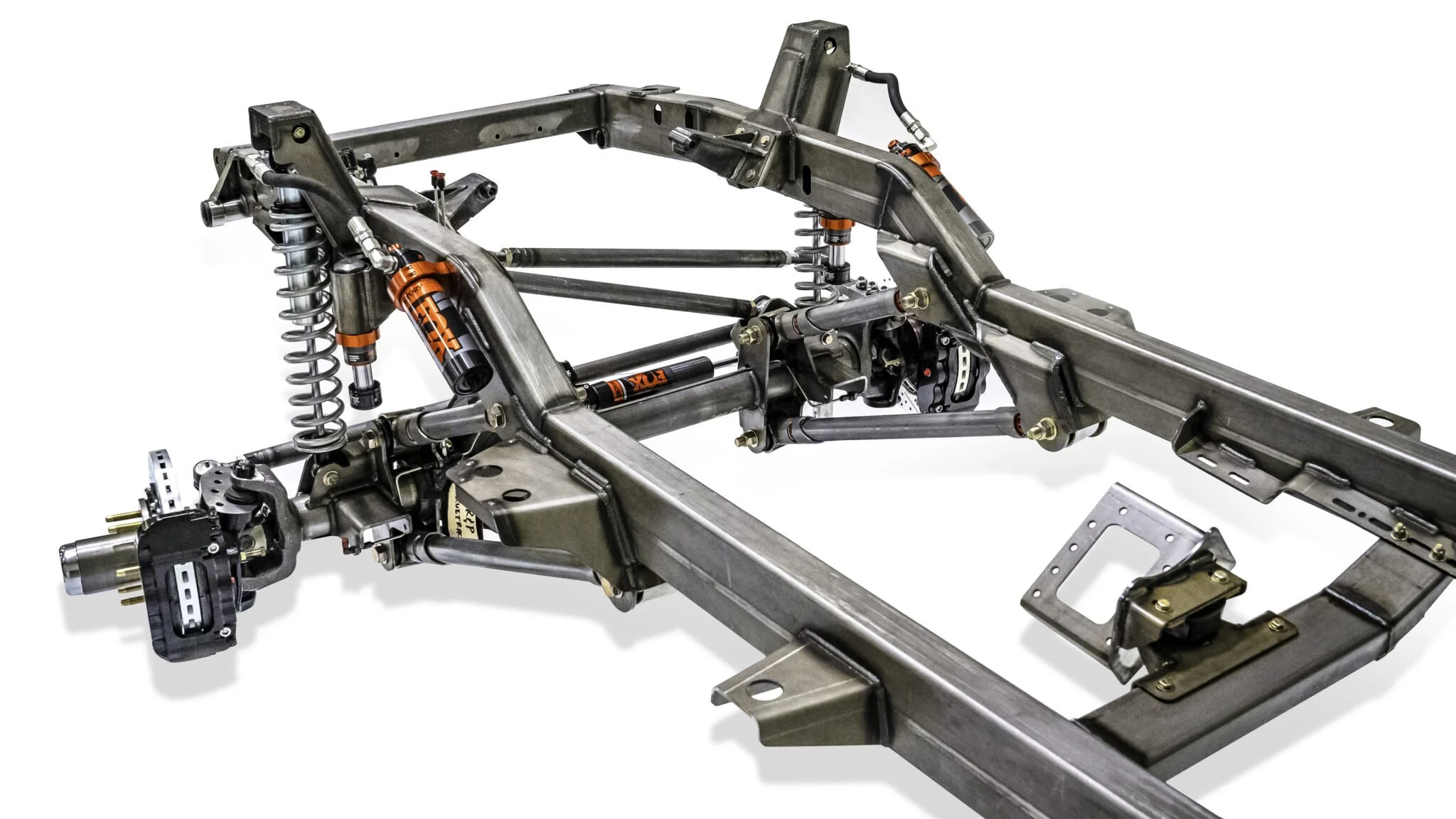
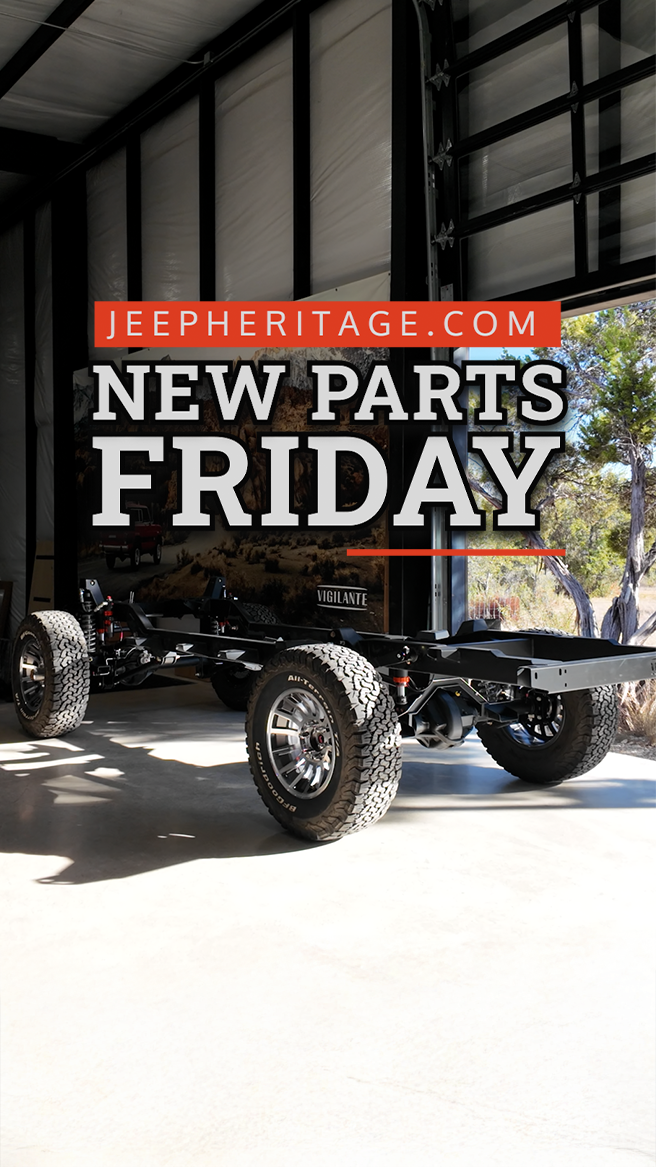
Vigilante Rolling Chassis for Classic Jeeps SJ (1963–1991)
Elevate your FSJ restoration with the Vigilante Rolling Chassis. Engineered in Texas for '63-'91 Jeeps, it’s the ultimate smart design solution.
The ultimate foundation for your FSJ build, engineered for a perfect body-to-frame fit.
The original frame, even when carefully restored, retains the fundamental limitations of its 1960s design: torsional flex, dated suspension geometry, and a lack of support for modern powertrains. For owners seeking a no-compromise restoration, there was simply no worthy solution on the market.
The VIGILANTE rolling chassis was co-developed with Roadster Shop, the recognized industry leader in custom chassis manufacturing. It offers unparalleled torsional rigidity, a modern four-link suspension, and engine mounts designed natively for modern Hemi V8s. It is the foundation of all our VIGILANTE restorations, now available for your project.
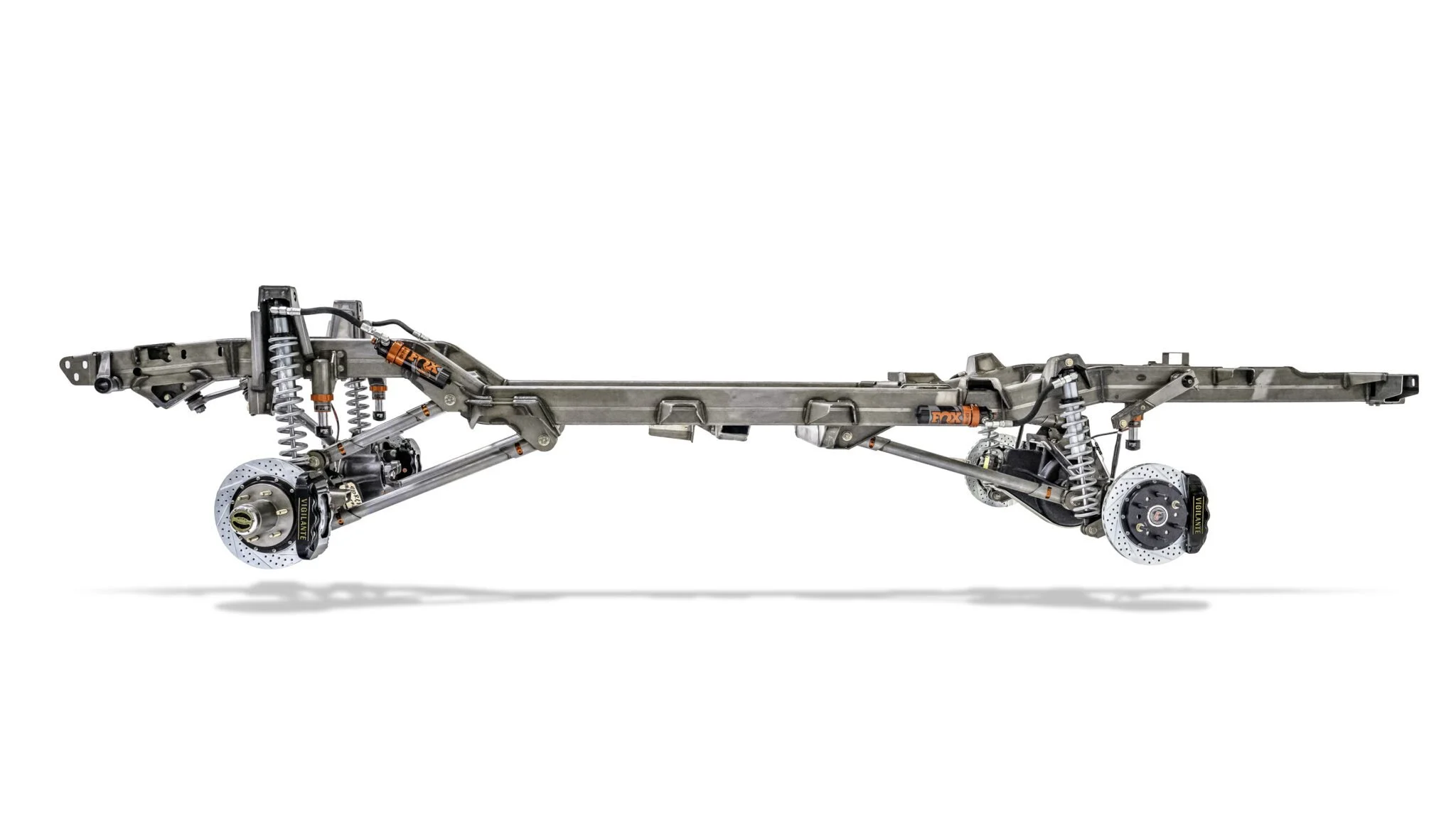
Exclusively designed for builders who demand uncompromising performance and precision, the Vigilante Chassis transforms your full-size Jeep Grand Wagoneer (SJ) into a modern-handling machine. Each frame is engineered from fully boxed 5" x 2.5" rails and designed to integrate seamlessly with your stock Grand Wagoneer (SJ) body — no cutting or fabrication required.
This chassis combines race-inspired geometry, premium suspension components, and bulletproof drivetrain mounts to deliver unmatched strength and ride quality both on and off the road. With fully adjustable 4-link suspension and Fox Racing shocks, it provides the perfect balance of articulation and control whether you’re cruising the highway or crawling a trail.
Every Vigilante chassis is built to order in collaboration with one of the nation’s leading chassis manufacturers, ensuring exceptional quality and precision. We maintain limited stock of all chassis variants. Non-stock and custom-configured builds generally require 6 months, depending on the level of customization and selected options. For the most accurate estimated lead time, please contact our team directly.
⚙️ Standard Features:
Fully boxed 5" x 2.5" frame rails
All stock body, bumper, and core support mounts
Bolt-on engine stands for Hemi, Hellcat, Coyote, LS, or LT engines
Structural center crossmember with removable transmission and transfer-case mounts
4-link suspension with Fast Link 1.75" front & rear 4-bars
Fox 2.0 Factory Series coilovers with 8.5" stroke (front & rear)
Currie Enterprises Dana 44 front and Dana 60 rear axles (complete with gears, axles, and TruTrac differentials)
Vigilante Signature 6-piston caliper brakes with 13" drilled & slotted 2-piece rotors from Baer
Stainless brake line package
💲Ordering and Payment Instructions
To begin your Vigilante Rolling Chassis order, simply add the chassis (and any optional add-ons) to your cart and proceed through the checkout process.
During checkout, a 100% discount is automatically applied, bringing your total to $0.00. This step allows us to collect your order details and contact information without requiring payment upfront.
Once we receive your order submission, a member of our team will personally reach out to confirm your configuration and provide payment instructions. Accepted payment methods include ACH/Wire transfer or certified check.
We handle payments this way to avoid unnecessary credit card transaction fees on large custom orders and to ensure every build is reviewed and verified by our staff before production begins.
You’ll receive a confirmation email immediately after checkout — this confirms that your order details were successfully received.
➕ Optional Add-Ons:
Vigilante Chassis Finish – Powder-coated black or raw metal
Choice of 17x8 Vigilante wheels: Turbine, Wagon-Style, 5-Slot, or Hubcap-Style
Vigilante 26-gallon stainless steel fuel tank and pumps
Vigilante AMP Research Power Steps
Vigilante Electronic Parking Brake Kit
🚫 Does Not Included:
Shipping to destination. Calculated once order is ready to ship.
VIGILANTE 17-Inch Wheels — Four Authentic Styles
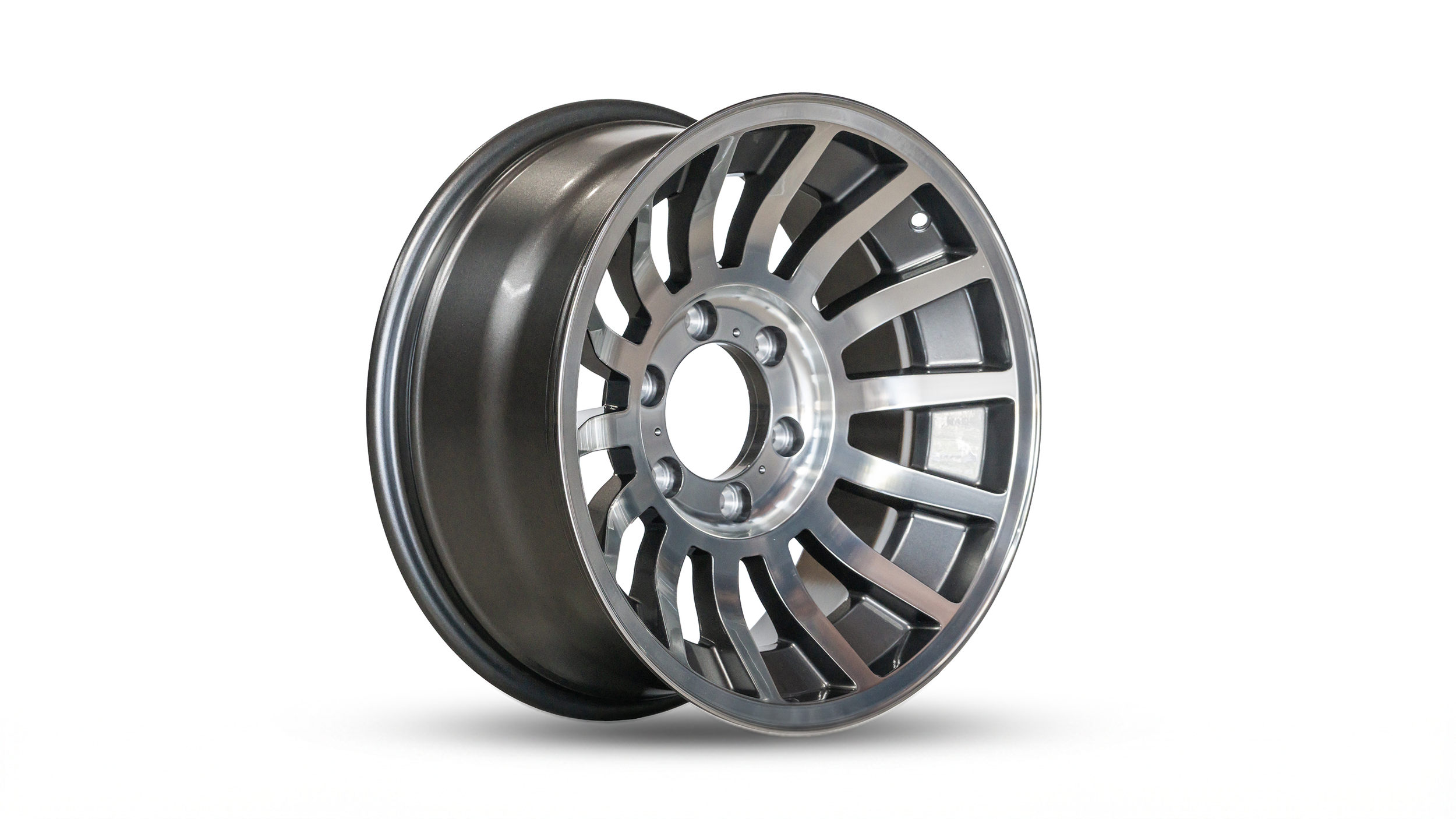
Reproduction 17-Inch Vigilante Turbine Wheels for Classic Jeep Grand Wagoneers (1963-1991)
Upgrade your performance without losing the classic look—scaled to 17x8 for larger brakes and tires!
Watch Nick show you how we scaled the iconic Turbine wheel to 17 inches for modern performance!The original 15-inch wheels are beautiful, but they create a bottleneck for any brake upgrades. It's impossible to install larger, more effective modern calipers and rotors without changing the wheel diameter. Owners were therefore forced to choose between the factory look and braking performance.
VIGILANTE solved this dilemma by 3D-scanning the original designs to capture every detail, then recreating them in 17x8-inch OEM-quality aluminum. Four styles are available to match your model and taste: the Turbine (the iconic design of the 1987–1991 models), the Wagon Wheel 8-Spoke, the Five Slot, and the Classic Hubcap. The look is true to the factory, but you can finally install the brakes your vehicle deserves.
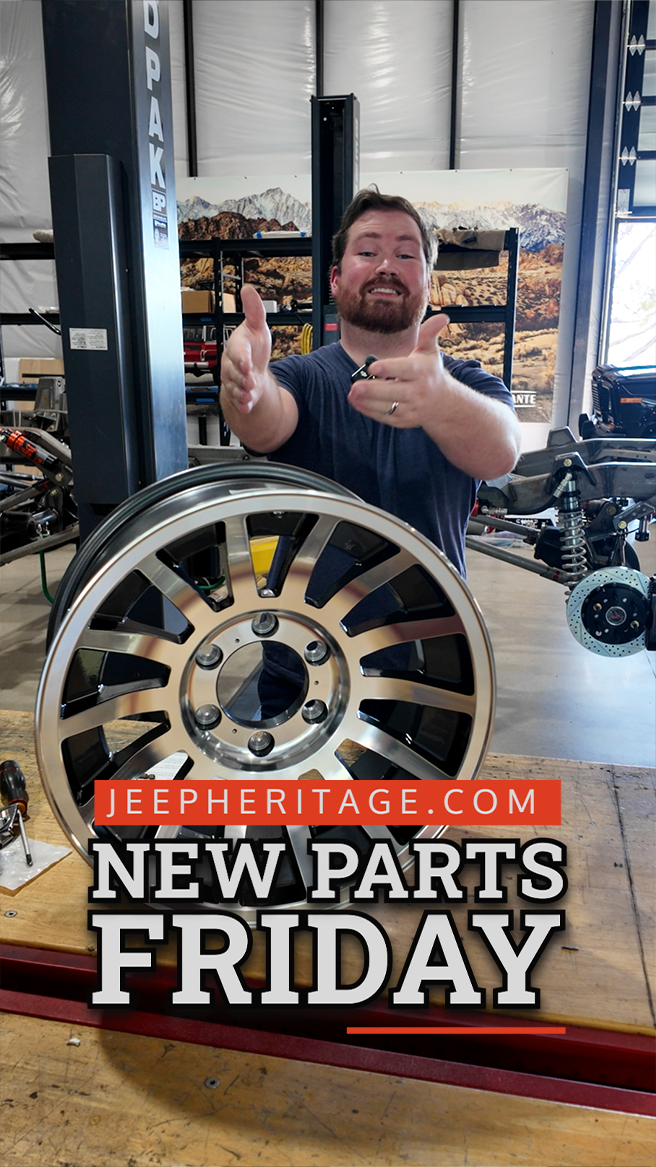
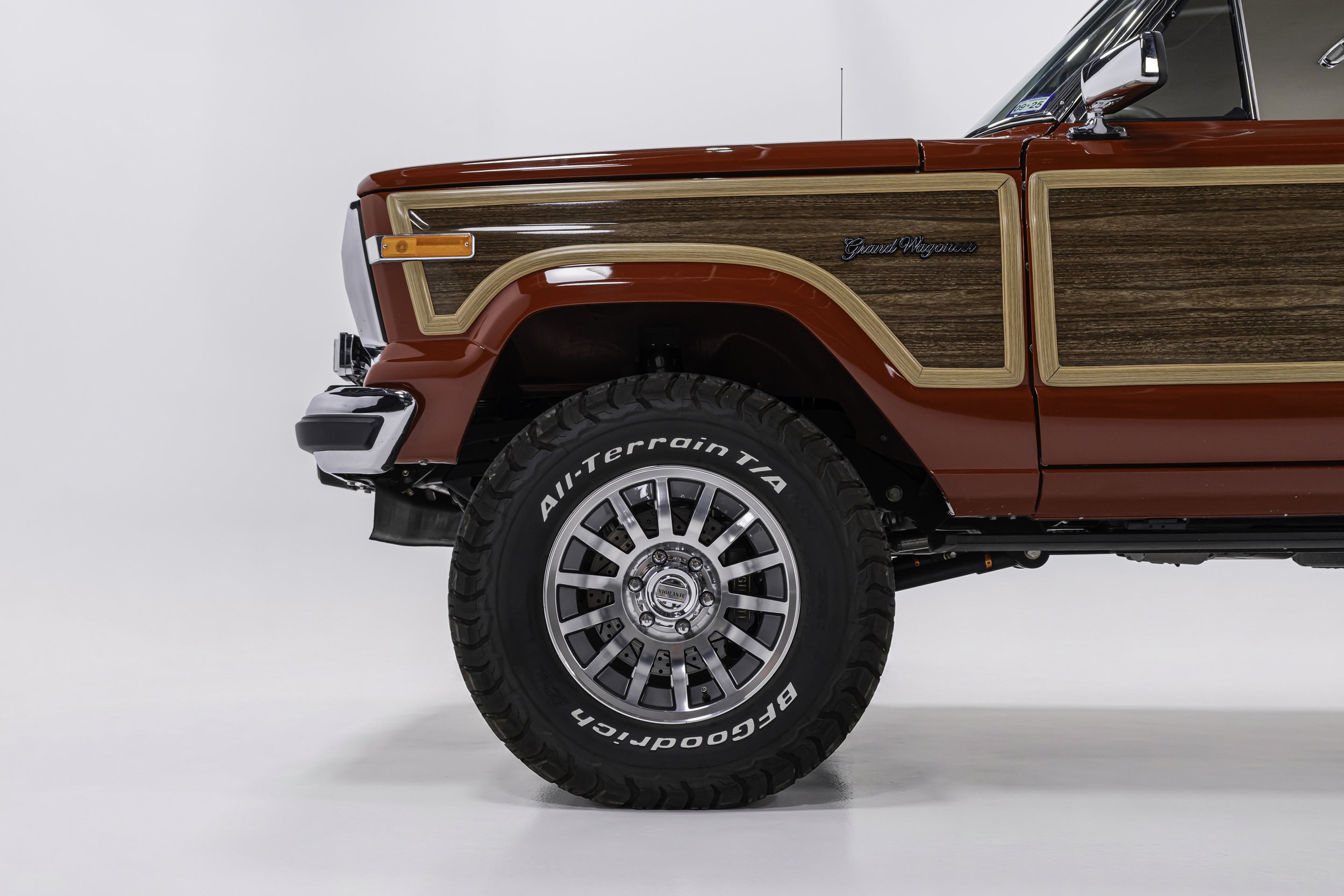
Vigilante’s 17-inch turbine-style wheels were engineered for high-quality restorations and resto-mod builds where factory appearance and modern performance must coexist. Inspired by the iconic 1987–1991 Grand Wagoneer turbine wheel, these wheels retain the original look while solving the limitations of factory 15-inch wheels.
Original Grand Wagoneer turbine wheels were never designed to accommodate modern braking systems or contemporary tire options. Vigilante re-engineered the turbine design at 17x8 inches to provide increased brake clearance, improved tire availability, and better overall drivability — all while maintaining the original Grand Wagoneer appearance.
Each wheel is cast from aluminum and finished in a factory-inspired gray paint, then machined, polished, and clear-coated. The result is a durable, period-correct finish that closely mirrors the original Grand Wagoneer turbine wheels while offering the strength and consistency of modern manufacturing.
These wheels are designed to fit 1974–1991 Full-Size Jeep models, including Grand Wagoneer, Wagoneer, and Cherokee SJ platforms. With 3.75 inches of backspacing, they offer excellent clearance for upgraded brake systems and work particularly well on vehicles with mild lifts (3.5 inches or greater), while maintaining proper stance and geometry.
These wheels accept original factory-style Jeep hubcaps for those seeking a stock appearance. Vigilante wheel center caps are also available separately for customers who prefer a fully finished, modern presentation.
Also Fits Chevy/GMC Square Body Trucks
Vigilante's 17-inch turbine wheels are fully compatible with 1973–1991 Chevy/GMC C10 and C/K square body trucks, making them one of the few period-inspired wheels available that cross between the classic Jeep and classic truck restoration worlds.
Square body owners face the same challenge Grand Wagoneer restorers do — factory 15-inch wheels can't clear modern brake upgrades. These wheels solve that problem with the same 17x8 sizing and 6x5.5 bolt pattern that drops right into C10 and C/K applications.
Specifications
Size: 17x8 inches
Bolt Pattern: 6 x 139.7mm / 6 x 5.5"
Backspacing: 3.75"
Construction: Aluminum casting
Finish: Painted gray, machined, polished, clear-coated
In Stock — Shipping Immediately
First production run is currently available and ships on a first-come, first-served basis.
Free nationwide shipping on small parts via UPS Ground.
Worldwide shipping available at additional cost.
Stainless Steel EFI Fuel Tank – Jeep Wagoneer, Grand Wagoneer & Cherokee (1980–1991)
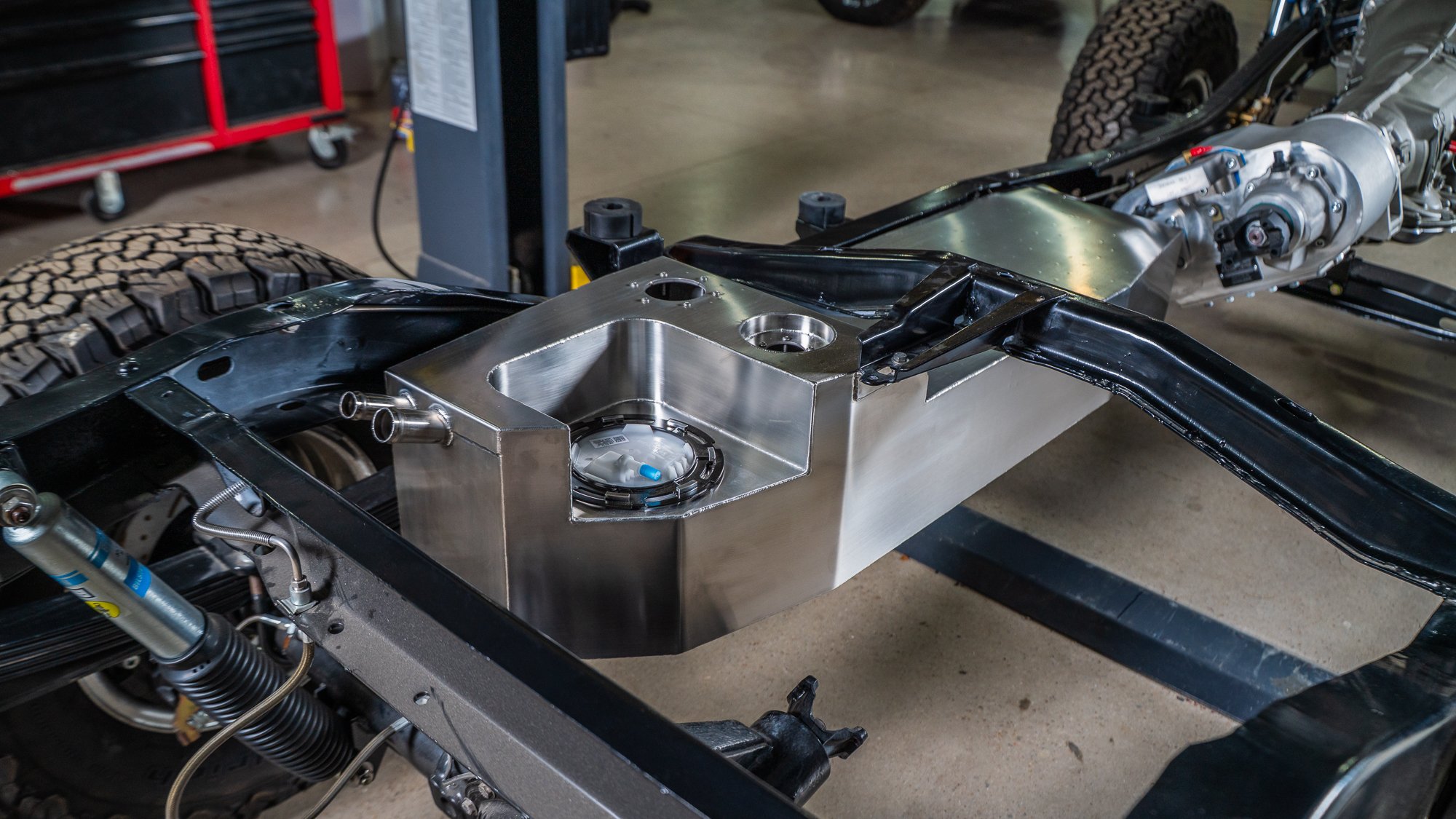
Ultimate EFI Fuel Tank for Jeep Wagoneer & Grand Wagoneer (1980–1991)
Upgrade to pure thick stainless steel, ready for LS & Hemi swaps with no modifications!
No more rusty tanks! Discover our pure stainless Ultimate EFI Fuel Tank for Hemi swaps!Upgrade the fuel system in your classic Full-Size Jeep with this stainless steel EFI fuel tank designed specifically for 1980–1991 Jeep Wagoneer, Grand Wagoneer, and Cherokee models.
Engineered by our team as a modern replacement for the factory plastic tanks, this system delivers reliable fuel supply for modern engine swaps while maintaining the original mounting location and factory spare tire position.
Unlike aftermarket aluminum tank kits that require extensive chassis modification and eliminate the spare tire location, this tank installs in the original factory position on the stock chassis, making it a true bolt-in solution for most 1980–1991 Full-Size Jeep applications.
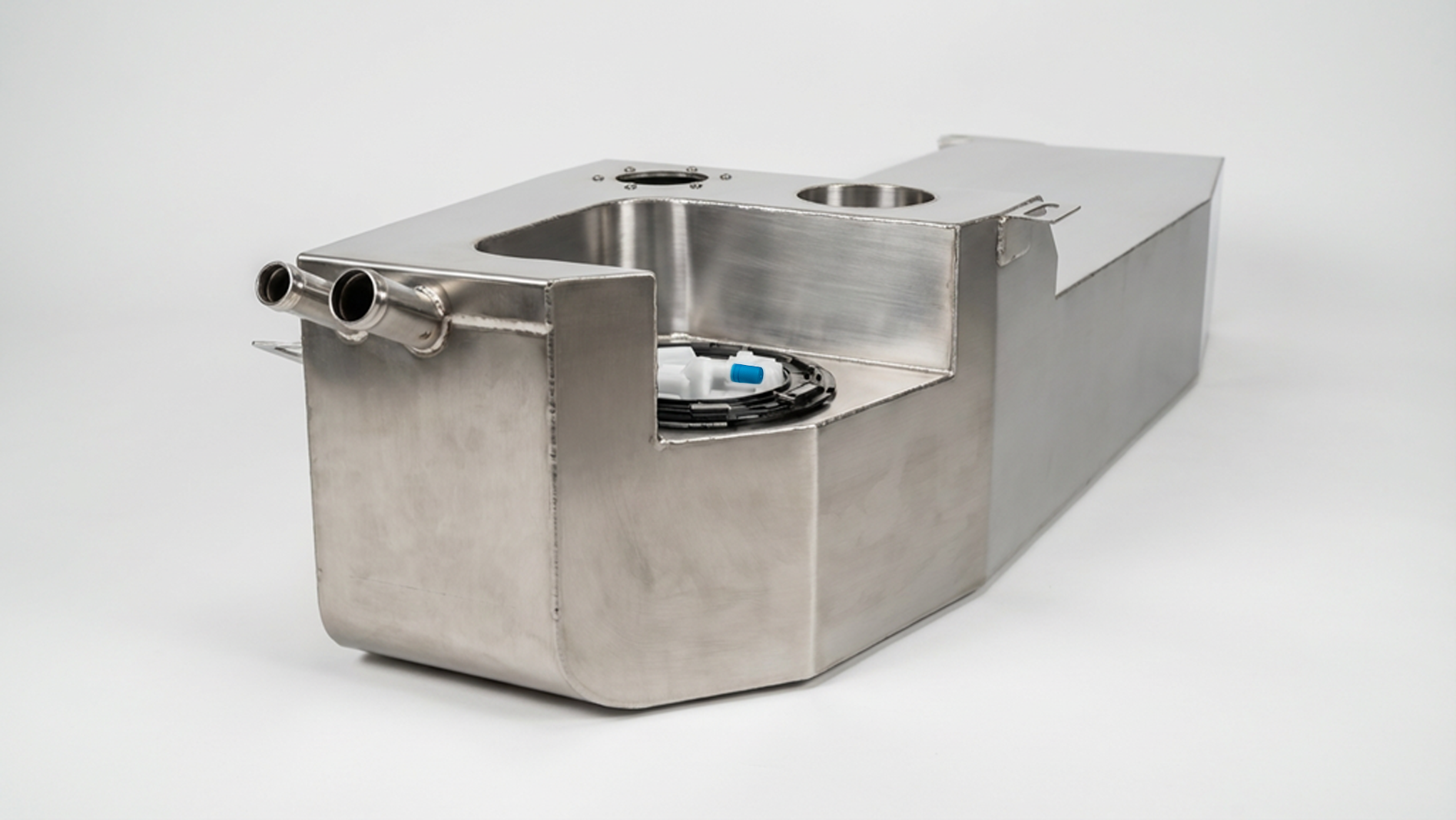
Upgrade the fuel system in your classic Full-Size Jeep with this stainless steel EFI fuel tank designed specifically for 1980–1991 Jeep Wagoneer, Grand Wagoneer, and Cherokee models.
Engineered by our team as a modern replacement for the factory plastic tanks, this system delivers reliable fuel supply for modern engine swaps while maintaining the original mounting location and factory spare tire position.
Unlike aftermarket aluminum tank kits that require extensive chassis modification and eliminate the spare tire location, this tank installs in the original factory position on the stock chassis, making it a true bolt-in solution for most 1980–1991 Full-Size Jeep applications.
Constructed from 6-gauge 304 stainless steel, the tank is designed for long-term durability while supporting modern EFI fuel systems. Internal baffling prevents fuel slosh and starvation under acceleration, off-road angles, and low fuel levels.
Each tank includes a GM-style in-tank fuel pump producing an internally regulated 58 PSI, making it ideal for:
LS swaps
Hemi swaps
EFI conversions
Modern fuel injection systems
Because the tank retains the factory footprint, installation allows owners to keep the spare tire mounted under the rear of the vehicle, preserving the original Jeep design and utility.
A marine-grade Attwood vent system is installed to properly manage tank ventilation and pressure during operation.
This system provides the reliability and fuel delivery required for modern engine conversions while preserving the factory layout of the Jeep chassis.
Current Lead Time
Please allow approximately 8–10 weeks for this fuel tank to be built and prepared for shipment. Lead times are estimates and may vary depending on current production volume.
Key Features
Designed for 1980–1991 Jeep Wagoneer, Grand Wagoneer & Cherokee
True bolt-in installation on stock chassis
Maintains original spare tire location
Constructed from 6-gauge 304 stainless steel
Integrated GM-style EFI fuel pump
58 PSI regulated fuel delivery
Internal baffling to prevent fuel starvation
Marine-grade Attwood vent system installed
Compatible with modern EFI engine swaps
Designed for LS swaps, Hemi swaps, and EFI conversions
Raw stainless steel finish
Fuel Tank Specifications
Capacity: 22.08 gallons
Empty Weight: 53.1 lbs
Full Weight: 187.43 lbs
Material: 304 stainless steel
Finish: Raw stainless steel
Fuel Pump: GM-style internally regulated pump (58 PSI)
Vent System: Attwood marine vent installed
Sending Unit Compatibility
Selecting the correct sending unit ensures accurate fuel level readings with factory gauges and modern aftermarket gauge systems including Dakota Digital and Speed Hut.
Installation Notes
Direct bolt-in installation for 1980–1991 Wagoneer, Grand Wagoneer & Cherokee
Installs in the original factory tank location
Factory filler neck and hoses are retained
No relocation of spare tire required
No fuel lines or fittings included
Free nationwide shipping on small parts via UPS Ground
Mandrel-Bent Stainless Steel Dual Exhaust
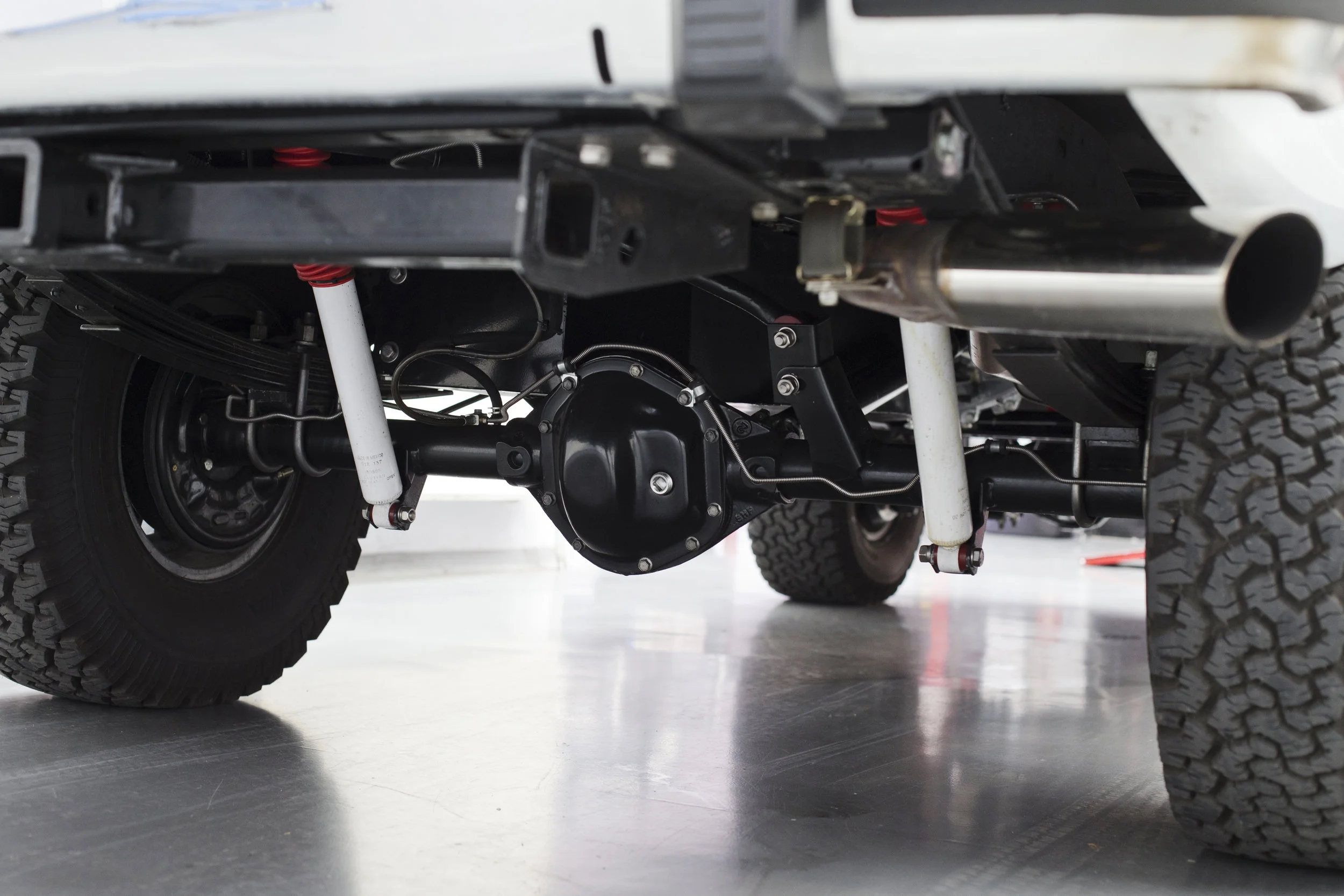
The factory single exhaust system is a significant restriction on the AMC 360's potential output and produces a muffled, uninspiring sound. Generic aftermarket systems are made from mild steel that rusts from the inside out within a few years.
Our dual exhaust system is mandrel-bent from 304 stainless steel — the same material used in marine and aerospace applications. Mandrel bending maintains a consistent interior diameter throughout every curve, ensuring maximum flow and a deep, authoritative exhaust note. It is built to last the lifetime of the vehicle.

Upgrade your classic Jeep’s performance and tone with our Mandrel-Bent Stainless Steel Exhaust System, precision-engineered for 1980–1991 Jeep Wagoneer, Grand Wagoneer, and Cherokee models equipped with the AMC V8 engine.
Crafted from premium stainless steel, this exhaust delivers improved flow, exceptional durability, and a refined exhaust note — all while maintaining a clean, OEM-style fit and appearance.
The system includes mounting hardware and gaskets to connect to your factory exhaust manifolds, and features a right-side single output design for proper fitment.
Optional ceramic-coated manifolds and Remflex gaskets are available for enhanced heat resistance and sealing performance.
Fits 1980–1991 Jeep Wagoneer, Grand Wagoneer, and Cherokee with AMC V8
Full stainless steel mandrel-bent tubing for smooth flow and strength
Right-side single exhaust configuration
Includes mounting hardware and gaskets
Optional ceramic-coated manifolds and Remflex gaskets
Direct-fit, OEM-style design for classic Jeep restorations
Free nationwide shipping on small parts via UPS Ground
Other Powertrain & Chassis Parts
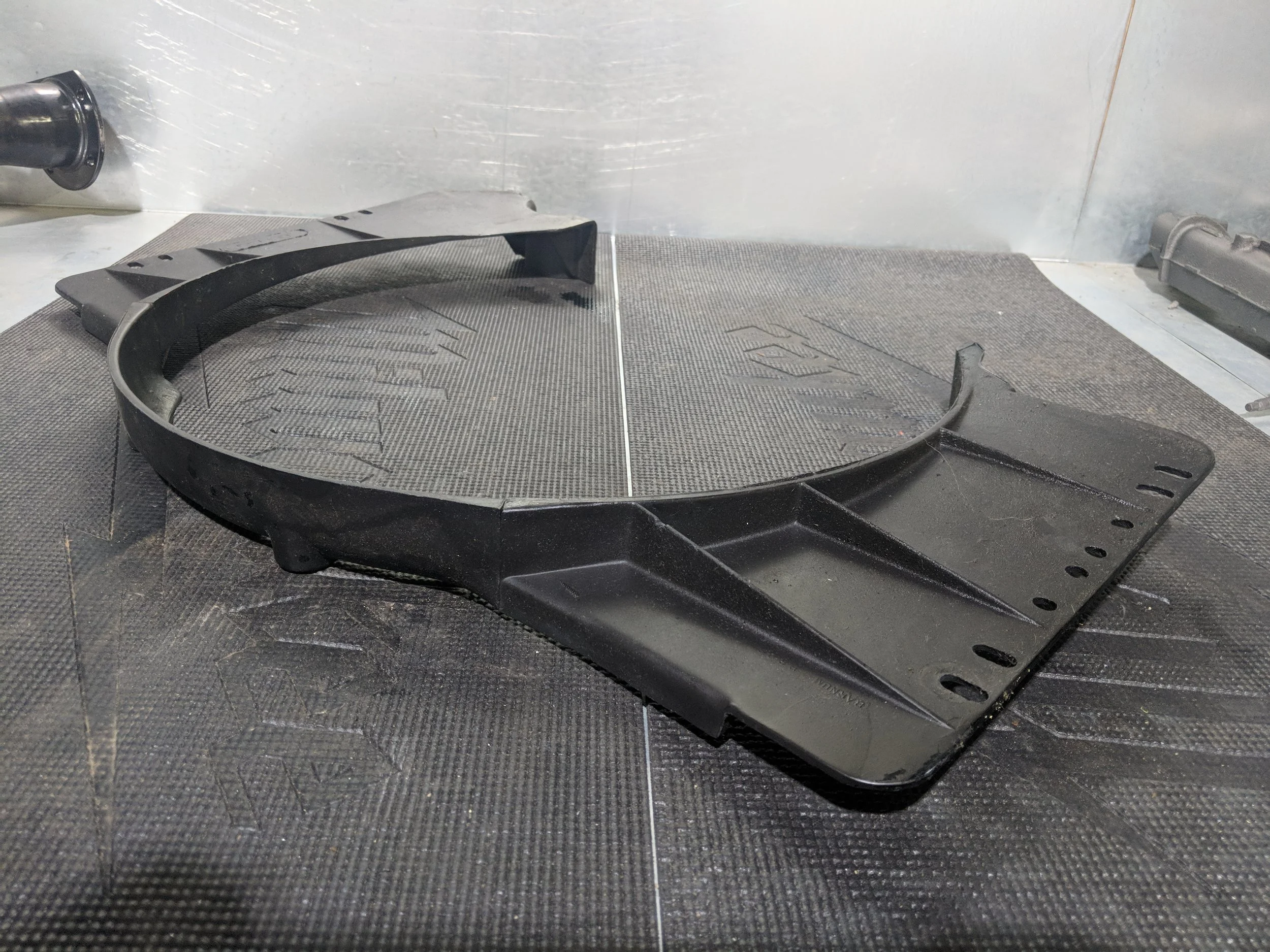
Keep your classic Jeep running cool with this New Old Stock (NOS) fan shroud, an original factory part — not a reproduction. Designed specifically for Jeep Wagoneer, Cherokee, and J10 models equipped with the AMC V8 engine, this genuine shroud ensures proper airflow and optimal cooling performance just as Jeep intended.
Ideal for restorations where authenticity matters, this rare find brings factory precision and original fitment back under your hood.
Features:
Genuine New Old Stock (NOS) Jeep fan shroud
Fits Jeep Wagoneer, Cherokee, and J10 with AMC V8
Original factory part – not reproduction
Ensures proper airflow and cooling efficiency
Perfect for concours-level restorations or stock rebuilds
Free nationwide shipping on small parts via UPS Ground.
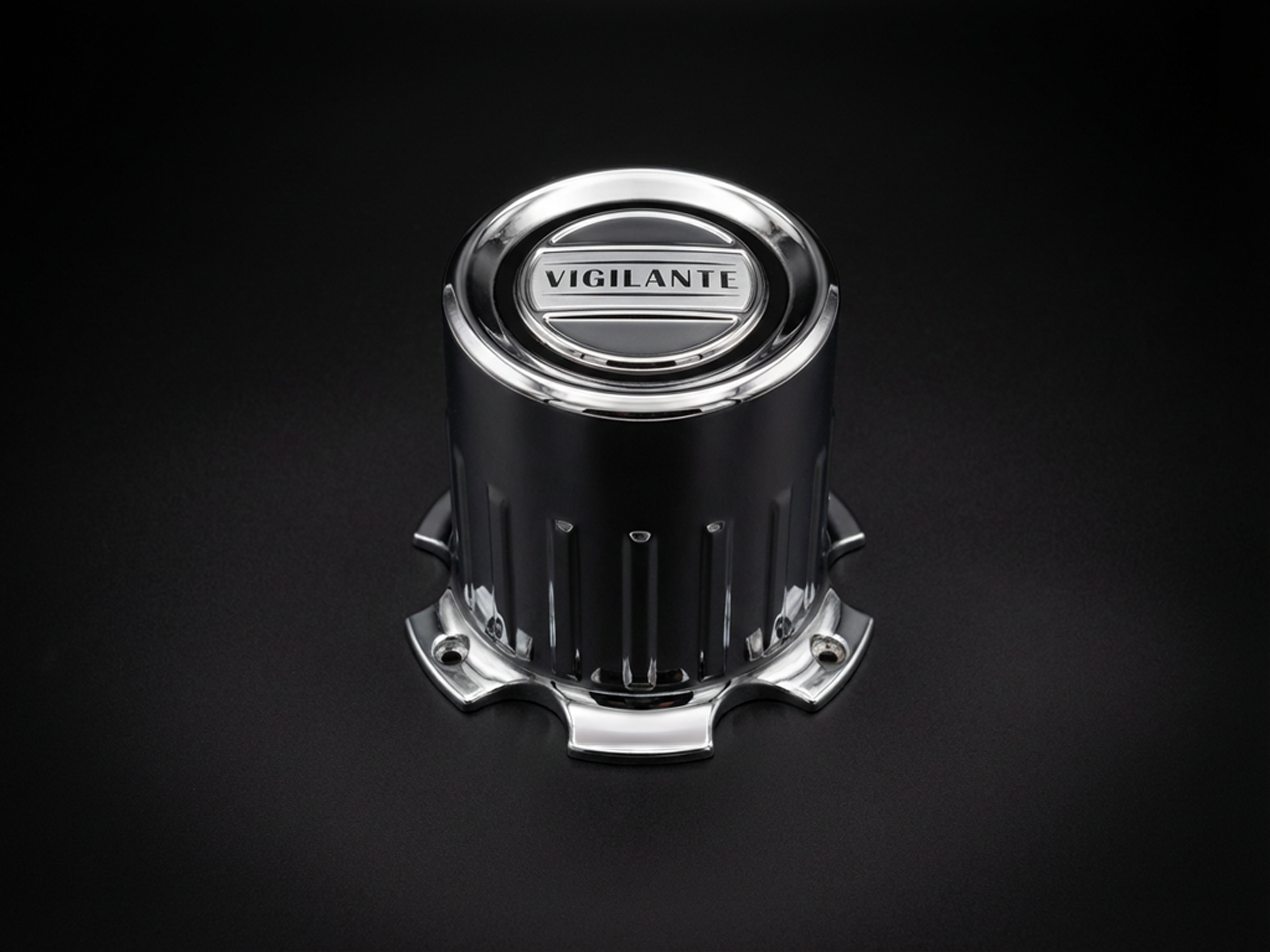
Complete your classic Jeep wheels with a factory-inspired center cap designed specifically for Full-Size Jeep applications.
This blank Jeep wheel center cap is a brand-new reproduction built to match the original center caps used on Jeep Wagoneer, Grand Wagoneer, Cherokee, and J-Series truck models. Manufactured from steel and finished in durable chrome plating, it delivers the correct fit, appearance, and proportions expected by Full-Size Jeep enthusiasts.
Designed as a direct replacement for original FSJ wheel center caps, this cap is ideal for restorations, replacement applications, spare wheel sets, or custom builds that require a clean, factory-style appearance.
Each center cap ships with a metal Vigilante badge that may be installed or omitted based on your preferred look. Leave the cap blank for a more traditional OEM-style appearance, or apply the included Vigilante badge to complement a Vigilante-inspired build.
Whether you're restoring a Grand Wagoneer to factory condition or adding the finishing touch to a custom wheel package, these center caps provide the fit and appearance that complete the look.
Features
Blank factory-style wheel center cap
Includes optional metal Vigilante badge (ships uninstalled)
Brand-new reproduction part
Steel construction
Durable chrome-plated finish
True OEM-style fitment and appearance
Includes three mounting screws
Direct replacement for original FSJ wheel center caps
Ideal for restorations, replacement applications, and custom builds
Fitment
Jeep Wagoneer
Jeep Grand Wagoneer
Jeep Cherokee (SJ)
Jeep J-Series Trucks (J10 / J20)
Blank or Vigilante Edition
Designed to give owners maximum flexibility, each center cap can be installed as a clean blank cap or customized with the included Vigilante badge. This allows builders and restorers to choose between a factory-inspired appearance or a subtle Vigilante-inspired upgrade while maintaining proper fitment and finish.
Other Center Cap Styles Available
Looking for a different look? Explore our other Jeep wheel center cap designs:
Free nationwide shipping on small parts via UPS Ground.
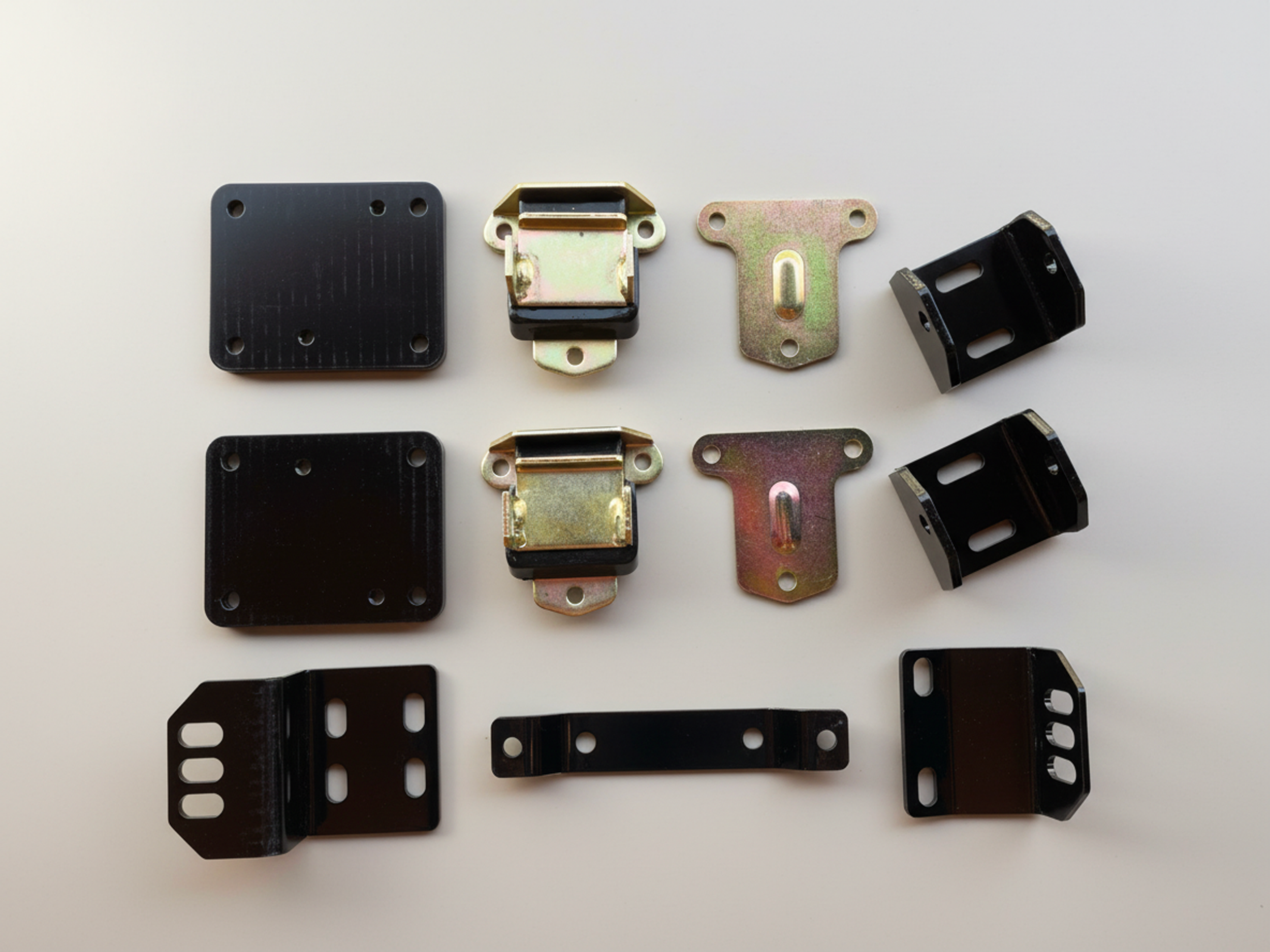
A Complete Bolt-On Solution for Installing a Gen III HEMI in Your FSJ
Swapping a Gen III HEMI into a Wagoneer, Cherokee, or J-Truck has always required custom fabrication — until now. This JeepHeritage-engineered system is the only bolt-on Gen III HEMI mount kit available for stock FSJ chassis. No cutting. No welding. Just a clean, engineered fit that uses the factory FSJ frame horns as intended.
Engineered for a Modern HEMI Swap — Without Fabrication
Developed in-house, this kit positions the HEMI exactly where it needs to sit for driveline alignment, hood clearance, and long-term reliability. Each component is steel, precision-made, and finished in gloss-black powder coat for durability.
Perfect for FSJ owners who want modern power without modifying the original frame.
Features
The only bolt-on Gen III HEMI mount kit for FSJs
Custom engine block adapter plates
Motor-mount-to-frame brackets designed for factory FSJ frame horns
Gloss-black powder-coated steel construction
No cutting or welding required
Accurate engine position and clearances
Compatible with Wagoneer, Grand Wagoneer, Cherokee, and J-Truck
Free nationwide shipping on small parts via UPS Ground
Available Configurations:
Option 1 - Engine Mount Kit
Includes:
Engine block adapter plates (driver + passenger)
Motor-mount-to-frame brackets (driver + passenger)
Motor mounts (driver + passenger)
A complete bolt-on engine mounting solution for Gen III HEMI swaps.
Option 2 - Engine + Transmission Mount Kit
Includes everything in Option 1 plus:
Crossmember mounting brackets designed for:
4L80E transmission with 1" adapter plate
Atlas II transfer case
Ideal for full drivetrain conversions.
A Modern, No-Fabrication Path to HEMI Power
This kit finally gives FSJ owners a clean, reliable way to install a Gen III HEMI without custom fabrication — engineered specifically for classic Jeep chassis.
Upgrade your classic Full-Size Jeep with modern convenience using AMP Research Power Steps paired with Jeep Heritage's exclusive vehicle-specific mounting system.
Designed specifically for 1963–1991 Jeep Wagoneer, Grand Wagoneer, and Cherokee SJ models, this complete kit combines AMP Research's industry-leading retractable running boards with custom-engineered Jeep Heritage mounting brackets for a clean, factory-quality installation.
Our brackets were developed in-house using CAD modeling and real-world testing to provide a precise fit for classic Full-Size Jeeps. Each bracket is professionally powder coated in black and includes the necessary mounting hardware for installation.
When the doors are opened, the power steps automatically deploy to provide a comfortable stepping height. Once the doors are closed, the steps retract beneath the rocker panels to preserve the clean lines of the vehicle while improving ground clearance.
Whether you're restoring a stock Grand Wagoneer, building a restomod, or upgrading a Vigilante chassis, this kit delivers modern functionality without compromising the appearance of your Jeep.
Features
Genuine AMP Research Power Steps
Exclusive Jeep Heritage engineered mounting brackets
Fits classic Full-Size Jeep (FSJ) models
Automatic deploy and retract operation
Powder-coated black mounting brackets
Complete mounting hardware included
Simplified wiring harness
Factory-style installation
Improves vehicle accessibility while maintaining ground clearance
Choose the mounting kit designed for your vehicle:
Early Model (1963–1975)
For early Jeep Wagoneer and Cherokee SJ models.
Late Model (1976–1991)
Designed for late-model Jeep Wagoneer, Grand Wagoneer, and Cherokee SJ vehicles.
Vigilante Chassis
Designed specifically for Vigilante builds utilizing our proprietary chassis configuration.
What's Included
AMP Research Power Step assemblies
Jeep Heritage engineered mounting brackets
Powder-coated black brackets
Simplified wiring harness
Mounting hardware
Lead Time
Current production lead time is approximately 7–10 business days.
Free nationwide shipping on small parts via UPS Ground.
Watch the video: https://youtube.com/shorts/lrnvIonsoRE?si=8sH0RQuTETIlrwvO
II. Exterior
Every exterior detail contributes to the iconic look of your Grand Wagoneer. These parts correct original manufacturing flaws with a quality of finish and durability that period parts never achieved.
Billet Aluminum Side Mirrors
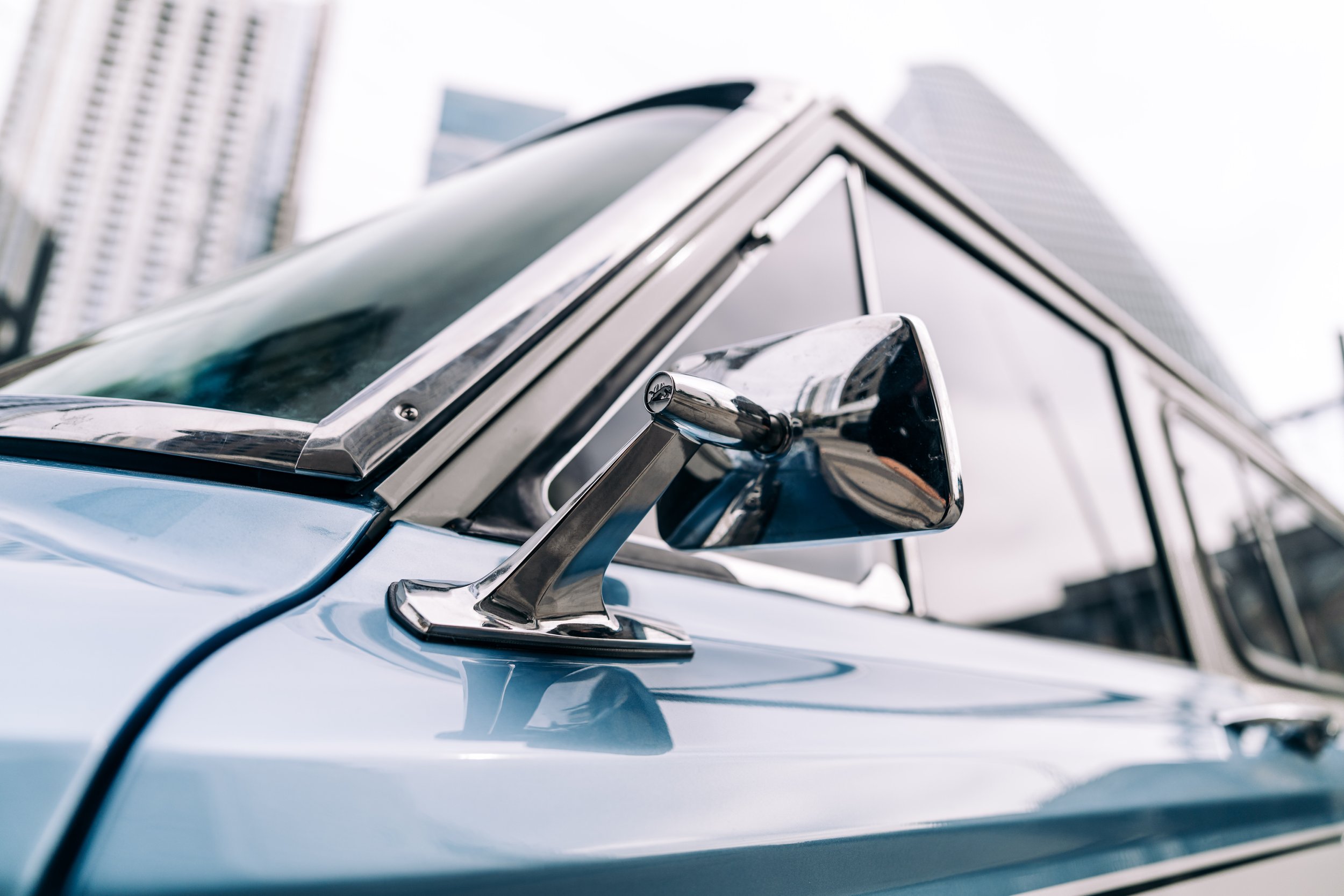
Flawless, Vibration-Resistant Billet Aluminum Side Mirrors for Jeep Wagoneer & Cherokee (1963–1991)
Eliminate the flop! Experience the lasting quality of our fully re-engineered, Texas-built mirrors.
Original mirrors suffer from a universal problem on all SJ models: their hollow construction and fragile pivot point condemn them to vibrate, gradually loosen, and inevitably fall off. Available market replacements reproduce the exact same flaws.
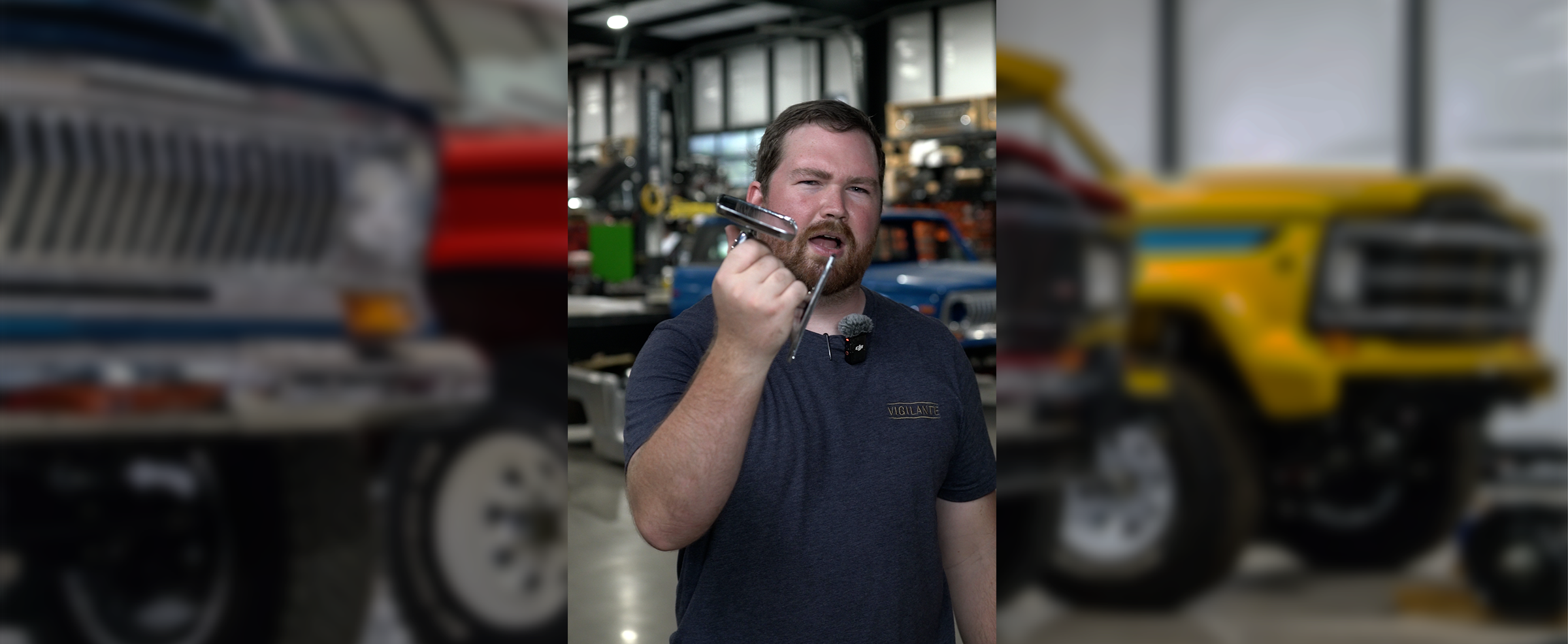
VIGILANTE addressed the problem at its root. Each mirror is CNC-machined from a solid block of aluminum, based on a 3D scan of the original part. The pivot ball is made of stainless steel, ensuring perfect visibility without any vibration, even on the roughest trails. The chrome finish is triple-plated for unparalleled shine and durability.
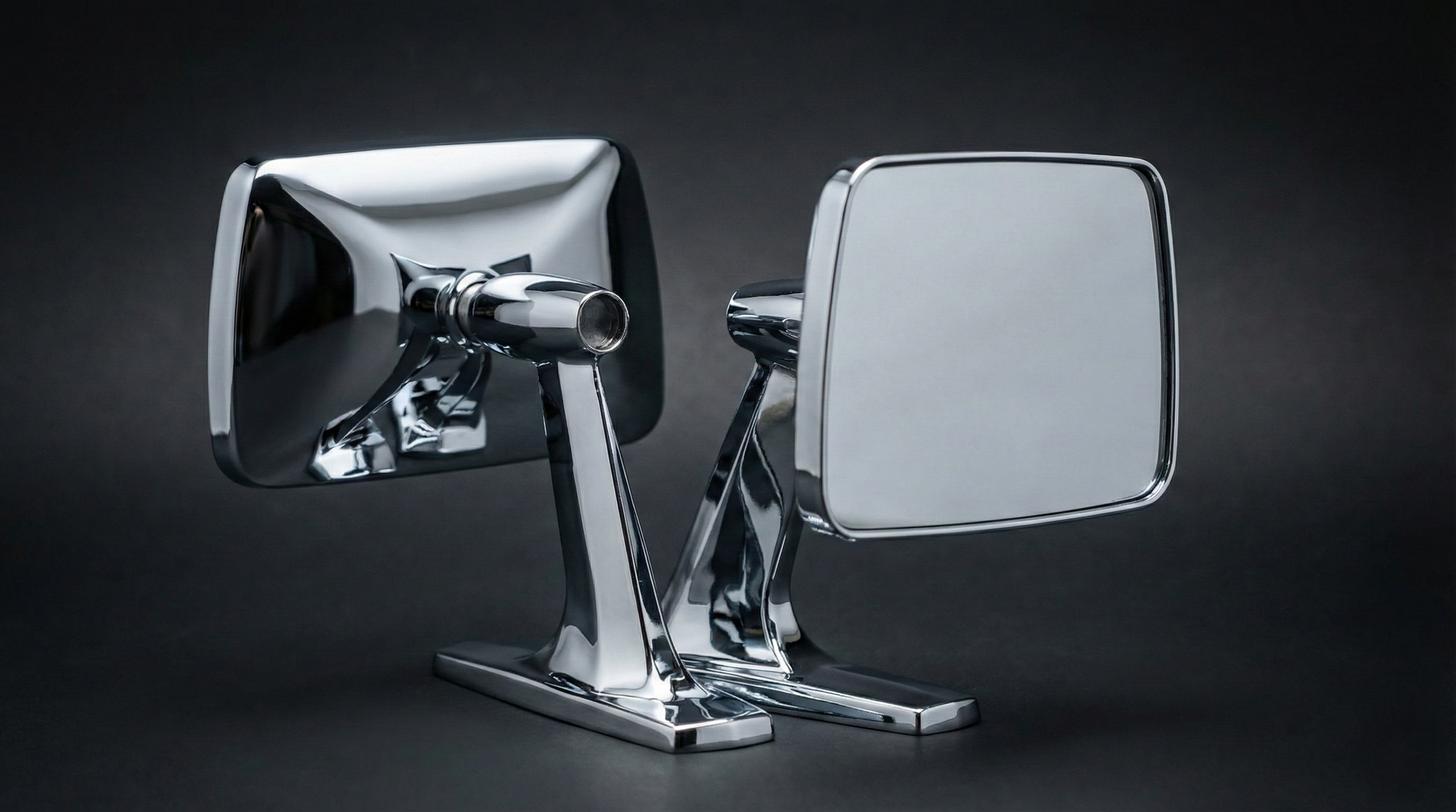
A modern take on a classic design. These Vigilante reengineered mirrors are a high-quality reproduction of the original 1970s-style mirrors found on full-size Jeeps—refined, strengthened, and finished in show-quality chrome.
Each mirror is CNC-machined from solid billet aluminum and redesigned for superior durability and long-term reliability. The updated construction eliminates the weak points of the factory design, with no visible exterior screws to improve security while maintaining a clean, period-correct appearance.
These mirrors are professionally chrome-plated for a deep, durable finish that complements restored or upgraded Wagoneers, Cherokees, and J-Trucks. Every set includes left and right mirrors, new black gaskets, mounting hardware, mirror glass, and installation instructions—everything required for a seamless, installation-ready upgrade.
Fits Jeep Wagoneer, Grand Wagoneer, Cherokee (SJ) & J-Truck
CNC-machined from solid billet aluminum for strength and longevity
Triple-plated chrome finish for long-lasting shine and corrosion resistance
No visible exterior screws for a clean look and improved security
Includes hardware, gaskets, glass, and installation guide
Redesigned for stronger mounting than original factory mirrors
Free nationwide shipping on small parts via UPS Ground
AMP PowerSteps® Retractable Running Boards

Getting into a Grand Wagoneer, especially a slightly lifted one, can be physically challenging. Permanent fixed running boards solve the access problem, but they compromise the vehicle's clean lines and can become an obstacle in off-road driving.
In collaboration with AMP Research, the leader in power running boards for production vehicles, VIGILANTE has developed custom brackets for a perfect integration on all 1963–1991 SJ models. The running boards automatically deploy when the door is opened and retract when it is closed, fully preserving your Jeep's classic look.
AMP Retractable Power Steps for Vintage Jeep Wagoneer, Grand Wagoneer and Cherokee SJ (1963–1991)
Stepping into modern comfort on a vintage classic.
See these genuine Vigilante AMP Research Power Steps in action. Watch how this custom engineered solution brings modern comfort to your vintage classic.Upgrade your classic Full-Size Jeep with modern convenience using AMP Research Power Steps paired with Jeep Heritage's exclusive vehicle-specific mounting system.
Designed specifically for 1963–1991 Jeep Wagoneer, Grand Wagoneer, and Cherokee SJ models, this complete kit combines AMP Research's industry-leading retractable running boards with custom-engineered Jeep Heritage mounting brackets for a clean, factory-quality installation.
Our brackets were developed in-house using CAD modeling and real-world testing to provide a precise fit for classic Full-Size Jeeps. Each bracket is professionally powder coated in black and includes the necessary mounting hardware for installation.
When the doors are opened, the power steps automatically deploy to provide a comfortable stepping height. Once the doors are closed, the steps retract beneath the rocker panels to preserve the clean lines of the vehicle while improving ground clearance.
Whether you're restoring a stock Grand Wagoneer, building a restomod, or upgrading a Vigilante chassis, this kit delivers modern functionality without compromising the appearance of your Jeep.
Features
Genuine AMP Research Power Steps
Exclusive Jeep Heritage engineered mounting brackets
Fits classic Full-Size Jeep (FSJ) models
Automatic deploy and retract operation
Powder-coated black mounting brackets
Complete mounting hardware included
Simplified wiring harness
Factory-style installation
Improves vehicle accessibility while maintaining ground clearance
Choose the mounting kit designed for your vehicle:
Early Model (1963–1975)
For early Jeep Wagoneer and Cherokee SJ models.
Late Model (1976–1991)
Designed for late-model Jeep Wagoneer, Grand Wagoneer, and Cherokee SJ vehicles.
Vigilante Chassis
Designed specifically for Vigilante builds utilizing our proprietary chassis configuration.
What's Included
AMP Research Power Step assemblies
Jeep Heritage engineered mounting brackets
Powder-coated black brackets
Simplified wiring harness
Mounting hardware
Lead Time
Current production lead time is approximately 7–10 business days.
Free nationwide shipping on small parts via UPS Ground.
Watch the video: https://youtube.com/shorts/lrnvIonsoRE?si=8sH0RQuTETIlrwvO
Premium Chrome Bumpers (1984–1991)

Original bumpers are victims of rust and a chrome finish that flakes over time. The poor-quality reproductions available on the market do not compare to the factory parts, neither in terms of fit nor finish.
Jeep Heritage offers new bumpers with a superior quality chrome finish, done entirely in Texas in the same workshops as our VIGILANTE restorations. It's the same quality of chrome you see on our $300,000 builds.
Premium Chrome Bumpers for Jeep SJ & Grand Wagoneer (1963–1991)
Restore the iconic shine of your classic Jeep with our professional-grade, Texas-finished chrome bumpers.
Want a closer look? Watch Nick show you how we restore the shine to classic Jeep SJ bumpers!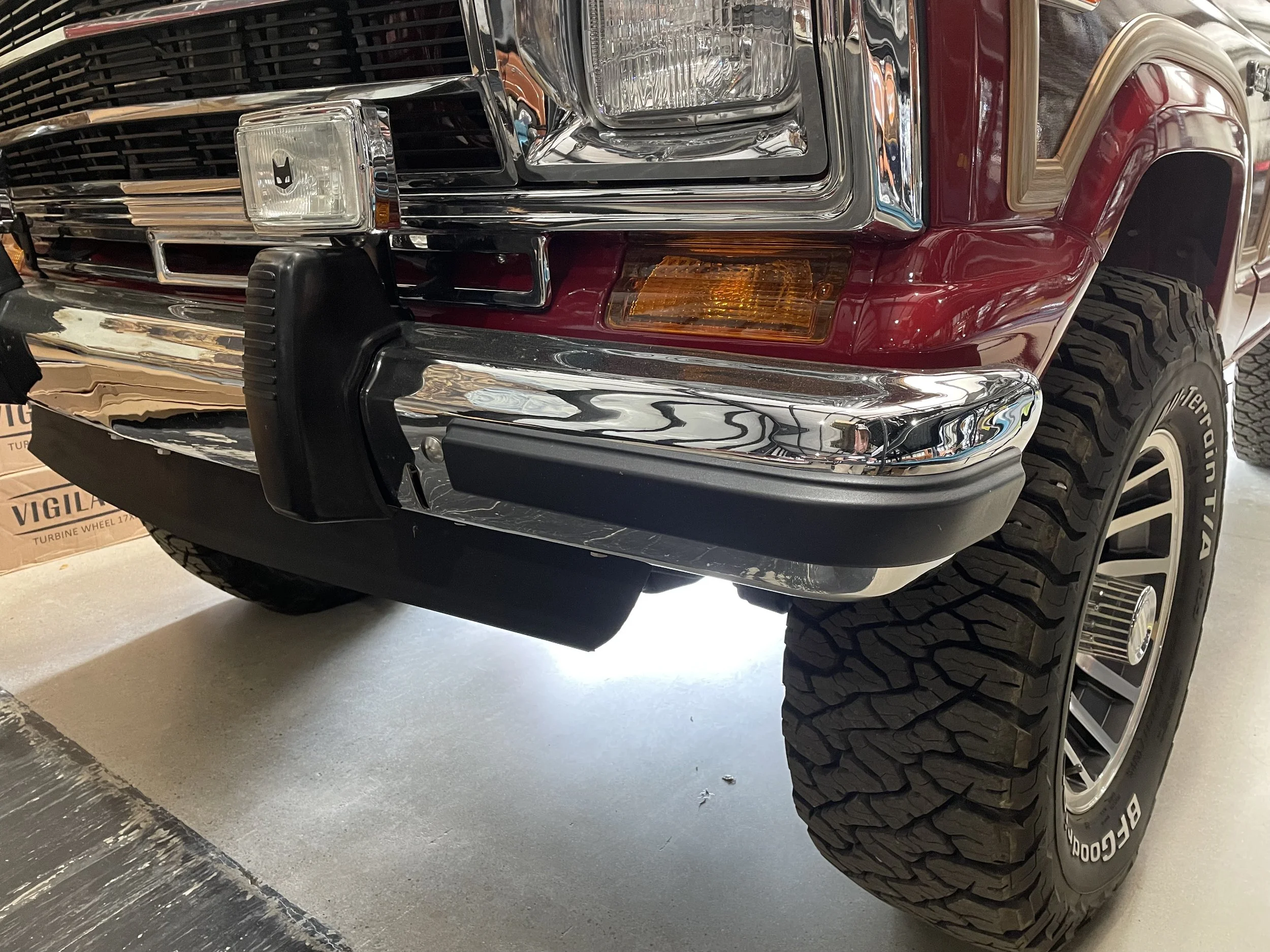
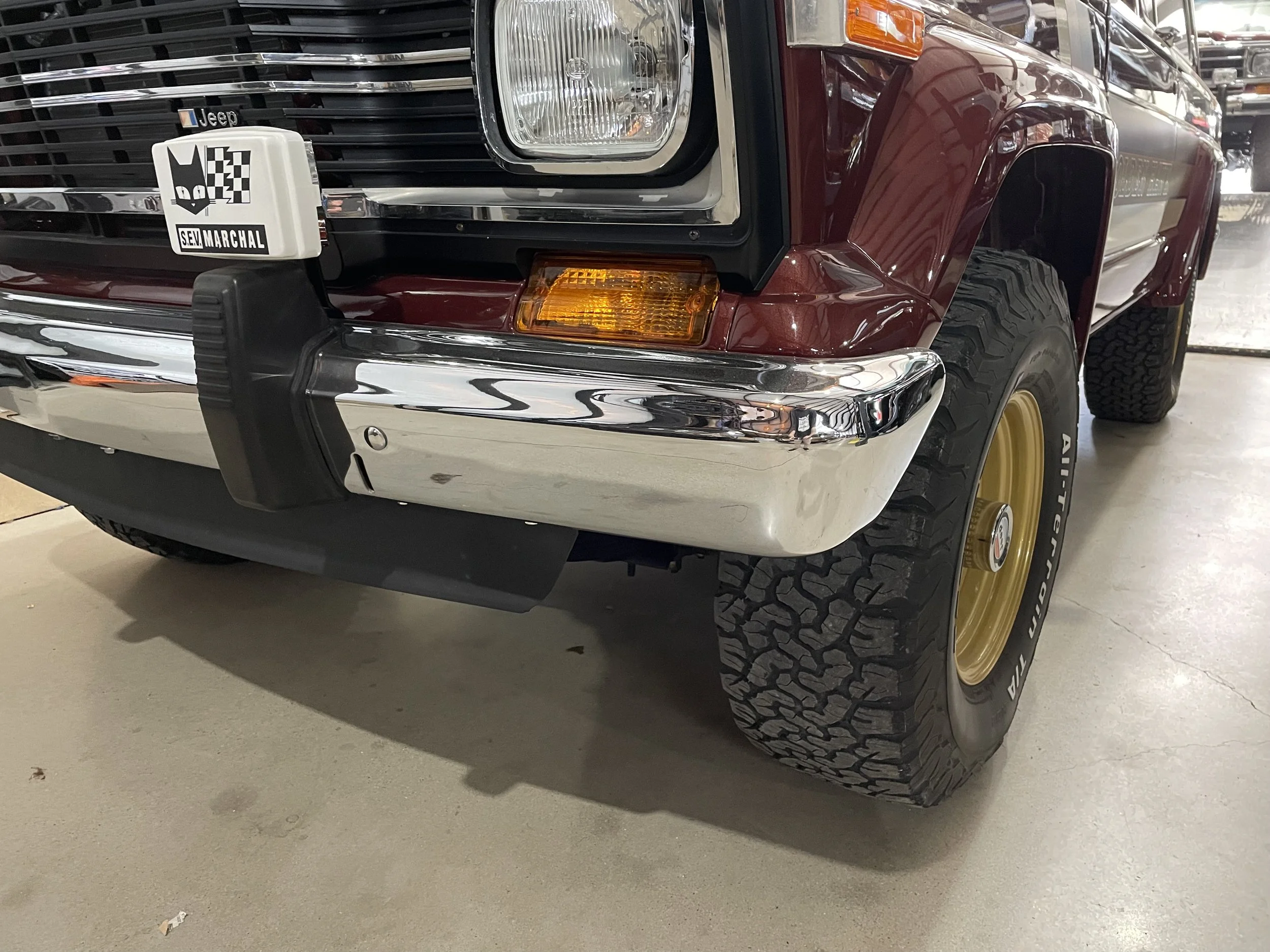

Give your Full-Size Jeep the finishing touch it deserves with this late-model single-piece front chrome bumper, designed for 1979–1991 Jeep SJ Wagoneer, Grand Wagoneer, Cherokee, and J-Series trucks. This bumper reflects the correct late-model factory design while delivering a clean, OEM-style appearance with modern durability.
Each front bumper is professionally stripped, plated, and finished to ensure long-lasting corrosion resistance and a consistent, high-quality chrome finish. Designed to fit both wide-track and narrow-track models, it offers proper alignment and factory-correct proportions—making it ideal for restorations, refreshes, or premium driver builds.
This single-piece front bumper is the same quality component used in Jeep Heritage restoration projects, ensuring authenticity, fit, and finish that meet enthusiast expectations.
Key Features
Correct single-piece front bumper for late-model SJ Jeeps
Fits 1979–1991 Wagoneer, Grand Wagoneer, Cherokee & J-Truck
Compatible with wide-track and narrow-track models
Professionally stripped and plated for long-term durability
Clean, OEM-style chrome finish
Ideal for restorations or driver-quality upgrades
Fitment
1979–1991 Jeep Wagoneer
1979–1991 Jeep Grand Wagoneer
1979–1991 Jeep Cherokee (SJ)
1979–1991 Jeep J-Series Trucks (J10 / J20)
Availability & Shipping
Limited quantities available
Free ground shipping within the USA.
Core Charge & Refund Policy
• All purchases require full payment upfront ($2,450).
• Send in a restorable steel core and receive up to $250 in Jeep Heritage store credit after approval.
• Buyer covers return shipping costs.
***Store Credit is issued once your core is received and inspected.***
Core Shipping Address:
JeepHeritage LLC
128 Martin Bros Lane
Johnson City, TX 78636
Please include your contact information and order number inside the package for proper refund processing.